

A ferry Santa Cruz to San Cristobal transfer is one of the main connections for travelers building a multi-island Galapagos itinerary. It links two of the archipelago’s best-known islands and can be an important step for visitors continuing towards San Cristobal after spending time in Puerto Ayora.
Although the route is straightforward, it is still a sea crossing with luggage, boarding times, and changing local conditions to consider. Planning the transfer as part of the trip, rather than as a simple journey between two points, makes the day much easier to manage.
Why the Ferry Santa Cruz to San Cristobal Is Useful for Island Hopping
Connect two important parts of the Galapagos itinerary
Santa Cruz is often the practical base where travelers organize tours, accommodation, and onward connections. San Cristobal offers a different rhythm, with coastal scenery, wildlife, and experiences that may become the next focus of the itinerary. The ferry Santa Cruz to San Cristobal allows visitors to move between both islands without interrupting the wider travel plan.
For many people, this route is not just about reaching another destination. It is also about creating a more varied Galapagos experience by combining different islands in the same trip.
Plan Your Ferry Santa Cruz to San Cristobal Departure Without Rushing
The best way to start a transfer day is usually with fewer commitments. Pack the night before, confirm the meeting point or departure details, and leave enough time to reach the dock calmly. A ferry Santa Cruz to San Cristobal works better when the morning is not rushed.
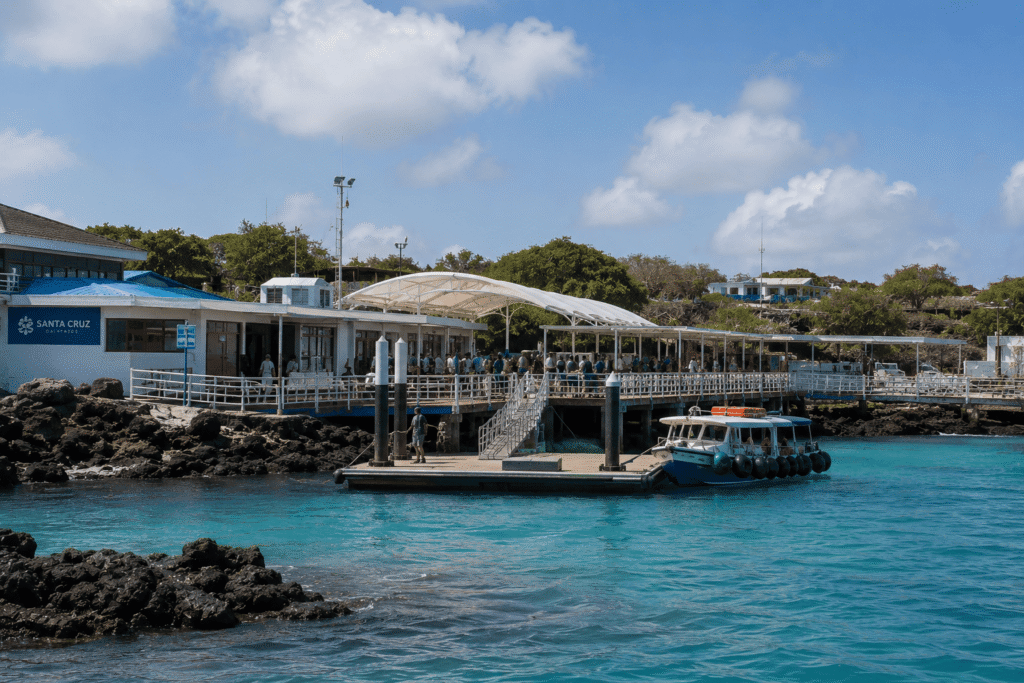
Avoid booking a demanding tour immediately before departure. Even when everything runs as expected, giving yourself space makes the whole experience more comfortable.
What to Consider Before Booking a Ferry Santa Cruz to San Cristobal
Choose the service level that fits your plans
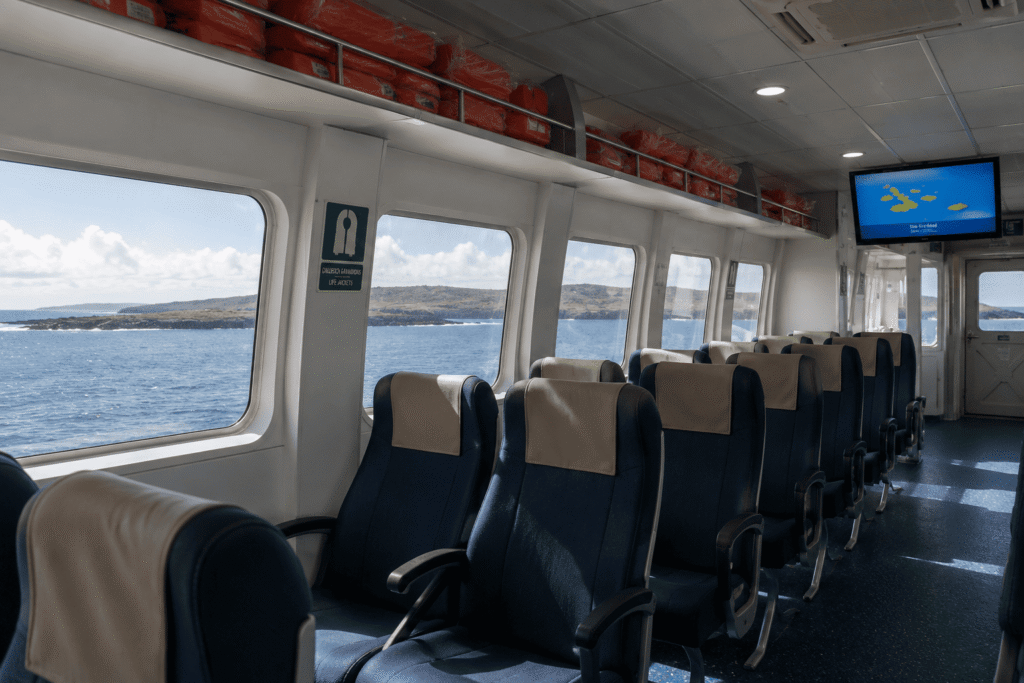
The route has different fare categories, which can be useful depending on how you are traveling. Essential includes the basic crossing, personal item, carry-on luggage, checked luggage, and standard assistance. Comfort adds lockers and coworking access, while Premium includes further services such as a lunch box, showers, printer use, and more flexibility for a route or date change.
Choosing the right option is not only about extra services; it is about matching the transfer to the pace of your itinerary.
Travelers with a longer wait, more luggage, or a later connection may find that additional comfort makes the travel day easier to organize.
Keep important items with you
Carry travel documents, medication, valuables, water, sun protection, and a light layer in your personal bag. Keeping essentials close is especially helpful during a ferry Santa Cruz to San Cristobal crossing.
It is also sensible to save accommodation details and important reservations offline before leaving. Mobile signal and battery should not be the only way to access the information you need on arrival.
Arriving in San Cristobal Without Overloading the Day
Leave space for the first afternoon
After a crossing, the best plan is often a simple one. Check in, have something to eat, walk around at an easy pace, or take time to review the following day’s activities. Arriving without a tightly packed schedule gives you a better start in San Cristobal.
This is particularly useful for travelers who are sensitive to boat journeys, arriving with children, carrying equipment, or simply looking for a slower transition between islands.
Continue with experiences that fit your trip
San Cristobal can be the starting point for different types of activities, including a 360 San Cristobal tour. Leaving enough time between the ferry and the next activity allows you to choose experiences with a more realistic understanding of your energy, timing, and needs.
Practical Coordination Makes the Crossing Easier
A ferry journey can feel very different depending on how well the details are organized around it. Clear information about luggage, waiting time, arrival plans, and support can turn a ferry Santa Cruz to San Cristobal into a smooth part of the itinerary.
This matters for travelers who need more time between steps, are carrying several bags, or prefer support while moving through an unfamiliar destination. Booking through a local service can make it easier to coordinate the route with the rest of the trip rather than treating it as an isolated ticket.
For broader planning, the inter-island ferry travel in Galapagos guide explains how transfers fit into routes between Santa Cruz, San Cristobal, and Isabela.
Before travelling, it is also useful to review visitor guidance from the Galapagos National Park and keep in mind that ferry departures follow local regulations and sea conditions.
Final Thoughts on the Ferry Santa Cruz to San Cristobal
A ferry Santa Cruz to San Cristobal is an important connection for travelers who want to experience more than one island during their Galapagos trip. The route becomes easier when you pack in advance, choose the service option that suits your plans, and leave time for a relaxed arrival.
With practical preparation and local coordination, the ferry Santa Cruz to San Cristobal can be a comfortable bridge between two distinct Galapagos experiences.